Many of the people I teach carriage driving lessons to come from some sort of background in riding. So, often times I am able to relate some of the things that transfer over from riding to help explain and have a better understanding of. However, there are also a lot of concepts students are very surprised are so different in carriage driving than in riding.
Riding and driving have their similarities and their differences. It is important for any driver to learn and practice these concepts to improve their driving skills. One of the most basic things we start talking about in lessons, is the use of the three aids.
What is an Aid?
When we talk about an “aid” we are referring to a way of communicating with the horse. The three driving aids are the three different ways we can communicate with our horse. Each of these becomes especially important with the driving horse, since we are so far back behind them and trusting them out in front to lead the way. If a horse is not responsive or understanding to one of our aids, we lose a vital component in our line of communication.
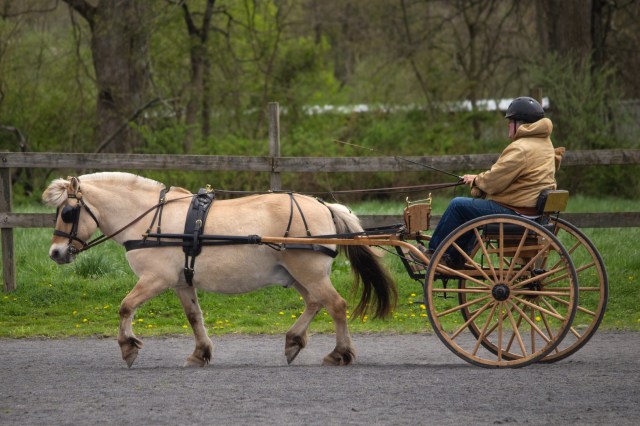
In carriage driving, we have three aids: our voice, the whip, and the lines.
Voice Commands
Voice commands are the way we communicate with the horse through our verbal speech. They are usually used to ask the horse to “do something”. This could be to move up or down a gait, to become more forward, to halt, to stand, to turn, or simply to encourage relaxation.
It’s important to realize that the horse cannot read your mind. If you want to ask them to change the way they are moving, you need to set them up for success in doing so. You cannot simply expect them to know exactly what you want them to do without giving them very clear directions. You also need to consider that they cannot always respond as quickly as they can outside of the carriage. For example, if you want your horse to halt and do not give them an indicator that you are going to ask for the halt, they do not have the appropriate time to set themselves up to stop the carriage behind them. This can creative a nervous and sore horse if you keep slamming the breaks on them instead of setting them up to stop the carriage and halt in such a way that is not so abrupt.

I have found that learning to use this aid effectively can be a challenge for those who come from riding. Typically, we don’t use many voice commands with the riding horse, and in some disciplines it is frowned upon to talk during riding. Personally, driving has changed that in my own riding. It’s effectiveness is so great, I think all equestrians should be talking to their horses more!
Developing your horses understanding of your voice commands starts way before the carriage. You can, and should, teach them the voice commands from the very beginning on the ground. The more consistent you are and the more often you’re using them, the more effective they become.
The Whip
When seated in the carriage, we lose the ability to have a physical connection with the horse. Depending on the type of vehicle you’re driving, you may even be seated in a vulnerable spot. This is where the whip becomes very important – it is the only thing we can reach out and physically touch the horse with.
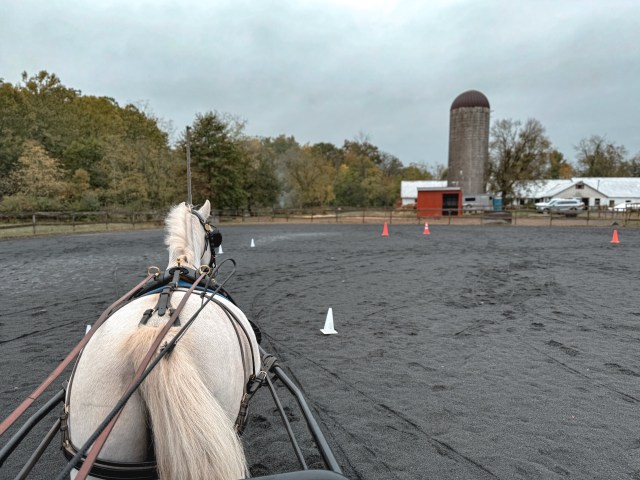
The whip is a tool we use to maneuver the horses body. It allows us to signal to the horses how we want their body to move. For riders, I often refer to it as becoming the leg and most importantly, the inside leg. It functions very similarly to the way your leg does when riding: we can use the whip on either side of the horse, and on various parts of the body. We can add whip, and we can take the whip off. And, just like with the leg, if you are using too much, too little, or an unsteady whip.. you can confuse your horse and interrupt the line of communication.
An effective whip aid requires two things: relaxation and understanding from the horse, and a steady handle of the whip from the driver. These are two things that, again, start and are developed outside of the carriage.
The Lines
The only connection we have to the horse that remains in effect for the entire duration of your driving, is the lines. What I mean by this, is that your lines are connected to the horses mouth for the entire drive; where as your voice and your whip can become completely quiet if you are not using them. While you can “drop” your lines and your connection – they are still attached and usually still “doing something” the entire drive.
This means it is extremely important how you use them. You are speaking to the horse through your lines with each and every step they take. Developing a quiet and consistent hand is crucial in developing a quiet and relaxed horse and communicating clearly with them.
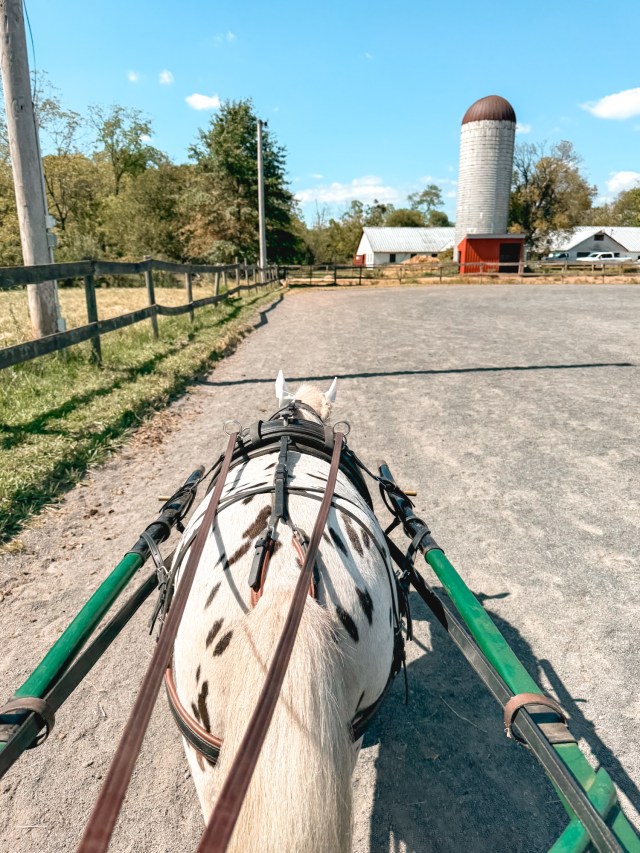
The lines are used to guide the horse, to support other aids, and to connect physically with the horse. You can easily talk to them with the slightest movements of your body via the lines.
The biggest challenge that those who come from riding face with the lines is finding and keeping that steady contact. In riding, there are various different ways to use the reins. The reins are really a support system for the rider and horse, because a rider should be communicating with their body and seat first, and reins second. You can throw away your reins on the buckle and still communicate with the horse through your seat and leg. In driving, if you throw away your lines you have lost ALL physical contact with the horse and they are essentially driving without your guidance. Because of this, we typically drive with more contact through the lines, and that can be a difficult thing to master for someone who is not used to it.
That being said: more contact DOES NOT equal more tension or pulling on the lines. It is a more refined and developed contact through the lines. You also need to take into account how long the driving lines are. We are all the way back behind their rear end – not right behind their neck. So the line of communication is generally softer, even if it feels heavier in your hand, because it has to transfer all the way through that line to the horses mouth.
This simply takes lots of practice, from both horse and driver, to develop clear, steady, and effective communication through the lines.
The Three Aids are a Support System
While all three aids are important in their own way, they all function more efficiently when used together. Each aid has it’s own major role, but each supports each other. It can be a challenge to work on all three independently while at the same time learning to use them cohesively.
Usually when asking the horse to “do something” we are asking through at least two, if not all three aids. This is where practice, and the help of an instructor, can really set you up for success in learning to communicate clearly and effectively with your horse. The better understanding you have of each other; the less problems you run into and the better you are able to enjoy your drive!
 The Pony Bunch